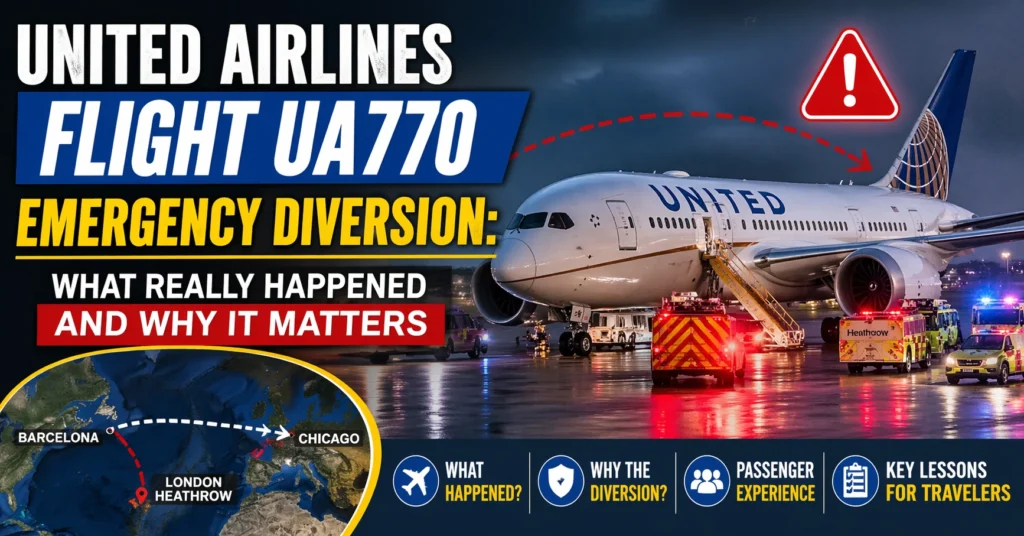

Air travel is usually smooth, quiet, and routine. Most passengers board, relax, and expect to reach their destination without any surprises. But sometimes, even the safest flights face unexpected problems. That is exactly what happened with united airlines flight ua770 emergency diversion.
This event quickly caught public attention. People wanted answers. Why did the flight divert? Was there danger onboard? Were passengers safe? And what can travelers learn from this?
The good news is simple: the crew acted fast, the aircraft landed safely, and safety procedures worked exactly as they should. Still, the story behind this flight is important because it shows how modern aviation handles emergencies in real time.
In this guide, we will explain everything in simple words. We will cover what happened, why diversions happen, what passengers experienced, and what lessons this event offers for future travelers.
What Is United Airlines Flight UA770?
Before discussing the emergency, it helps to understand the flight itself.
The united airlines flight ua770 emergency diversion involved a long-haul international route operated by United Airlines. Flight UA770 is commonly listed as a route between Barcelona and Chicago, usually arriving at O’Hare International Airport. It is often operated using a Boeing 787 Dreamliner, a large aircraft designed for long international trips. (FlightStats)
Passengers on this route include tourists, business travelers, families, and people connecting to other cities. It is normally a standard transatlantic flight with no unusual concerns.
That is why the diversion created so much interest. A sudden route change during an international flight naturally makes people nervous.
What Happened During the Emergency Diversion?
Reports suggest the crew noticed an onboard issue serious enough to justify an emergency landing. In many discussions about the united airlines flight ua770 emergency diversion, the most likely reason mentioned was either a medical emergency or a technical concern requiring immediate attention.
Some reports described the aircraft using “Squawk 7700,” which is the universal emergency code pilots use to tell air traffic control that urgent assistance is needed. (Touripia)
Instead of continuing to Chicago, the aircraft diverted to London Heathrow Airport, where emergency services were ready on the ground. Medical teams and airport staff responded immediately.
Passengers stayed onboard while responders handled the urgent issue first. There was no panic evacuation. The landing was controlled and safe.
This is the most important part: the system worked exactly as designed.
Table: Quick Summary of the Incident
| Detail | Information |
|---|---|
| Flight Number | UA770 |
| Airline | United Airlines |
| Common Route | Barcelona to Chicago |
| Aircraft Type | Boeing 787 Dreamliner |
| Emergency Code | Squawk 7700 |
| Diversion Airport | London Heathrow |
| Main Priority | Passenger and crew safety |
Why Flights Need Emergency Diversions
Many people think diversions only happen because of engine failure. That is not true.
The united airlines flight ua770 emergency diversion reminds us that flights divert for many reasons, including:
- Medical emergencies
- Cabin pressure problems
- Electrical faults
- Smoke warnings
- Mechanical checks
- Security concerns
- Severe weather
- Fuel planning issues
Sometimes the problem is major. Sometimes it is only precautionary. But pilots are trained to choose safety first, not convenience.
Even a small warning can lead to a diversion if it could become dangerous later.
That is why diversions are not signs of failure. They are signs of strong safety systems.
Was It a Medical Emergency?
Many aviation sources suggest the likely reason behind the united airlines flight ua770 emergency diversion was a serious medical issue involving a passenger.
This is actually one of the most common reasons for unexpected landings on long flights. If someone has chest pain, breathing trouble, fainting, or a possible heart problem, the crew may need immediate hospital access.
Doctors onboard may help first, but sometimes landing quickly is the safest option.
Long flights increase this risk because passengers spend many hours in the air with limited access to emergency care.
If this was the reason for UA770, the diversion was not dramatic failure—it was fast and responsible decision-making.
Table: Common Medical Reasons for Flight Diversions
| Medical Issue | Why It Matters |
|---|---|
| Chest Pain | Possible heart attack |
| Trouble Breathing | Risk of oxygen loss |
| Severe Allergic Reaction | Can become life-threatening |
| Loss of Consciousness | Needs urgent diagnosis |
| Stroke Symptoms | Time-sensitive emergency |
| Heavy Bleeding | Immediate treatment required |
How the Crew Responded
Cabin crew and pilots are trained for exactly these moments.
During the united airlines flight ua770 emergency diversion, professionalism mattered more than speed. The crew stayed calm, informed the cockpit, followed airline procedures, and coordinated with air traffic control.
Passengers often judge safety by crew behavior. Calm crew members reduce fear.
Pilots also work closely with dispatch teams and medical advisors on the ground. They do not make emergency choices alone.
Landing at Heathrow made sense because it offers:
- Major emergency medical support
- Long runways for large aircraft
- Strong airline operations support
- Fast ground response teams
Choosing the right airport is part of the safety plan.
What Passengers Experienced
For passengers, an unexpected diversion can feel confusing.
Some may notice the plane changing direction. Others may hear a captain announcement. Sometimes passengers check flight apps and realize something changed before the announcement even comes.
During the united airlines flight ua770 emergency diversion, travelers likely felt concern, especially on an international route far from home.
The biggest stress usually comes from uncertainty.
Questions like these are common:
- Is the plane safe?
- Will we still reach our destination?
- Are connecting flights lost?
- Should family be informed?
Good communication helps reduce this stress. Most travelers say honest updates matter more than perfect timing.
What Happens After Landing?
Landing safely is only the first step.
After the united airlines flight ua770 emergency diversion, several things likely happened:
- Medical teams handled the urgent case
- Ground engineers inspected the aircraft
- United staff helped passengers with rebooking
- Hotel or meal vouchers were arranged if needed
- New flights were scheduled for Chicago connections
Sometimes passengers continue on the same aircraft. Sometimes the plane stays grounded for inspection and another aircraft is assigned.
Safety checks always come first.
That delay may feel frustrating, but it protects everyone.
Table: Passenger Support After Diversion
| Support Type | Why It Helps |
|---|---|
| Rebooking | New travel plans |
| Hotel Stay | Overnight delays |
| Meal Vouchers | Long airport waits |
| Customer Support | Travel assistance |
| Baggage Handling | Prevent lost luggage |
| Compensation Review | Depending on situation |
Understanding Squawk 7700
One phrase often linked to the united airlines flight ua770 emergency diversion is “Squawk 7700.”
This sounds technical, but it is simple.
Pilots use a transponder code system. Code 7700 tells air traffic control there is a general emergency onboard.
It does not automatically mean disaster.
It means:
“Give us priority. We need help.”
This allows faster runway access, emergency vehicles on standby, and faster coordination.
People online often panic when they see 7700 on flight trackers. In reality, it is often a sign of good decision-making, not catastrophe.
It means the crew is acting early.
How Safe Are Emergency Diversions?
Very safe.
That may sound surprising, but diversions are usually controlled, planned, and handled professionally.
The united airlines flight ua770 emergency diversion is a good example. The aircraft landed safely, emergency teams were ready, and passengers were protected.
Commercial aviation remains one of the safest forms of travel in the world.
Diversions are not aviation failures.
They are aviation safety working correctly.
Pilots would rather land early than take unnecessary risks. That mindset saves lives.
So when you hear about diverted flights, the real story is often strong prevention, not danger.
Lessons Travelers Can Learn
Every traveler can learn something from the united airlines flight ua770 emergency diversion.
First, always stay calm. Panic helps no one.
Second, listen carefully to crew instructions. They are trained for emergencies.
Third, keep essential medicine in your carry-on bag, never checked luggage.
Fourth, tell crew members early if you feel sick during a flight.
Finally, remember that delays are frustrating, but safety matters more than speed.
I always tell travelers this: arriving late is better than never arriving.
That simple truth explains why diversions happen.
A Quick Note About Health: Know Warning Signs Early
Medical emergencies on flights often start with ignored symptoms.
That is why people search phrases like what are the symptoms of stomach cancer, signs and symptoms of stomach cancer, what are symptoms of stomach cancer, and early symptoms of stomach cancer.
Common warning signs may include:
- Unexplained stomach pain
- Feeling full too quickly
- Weight loss without trying
- Constant nausea
- Trouble swallowing
- Blood in vomit or stool
- Extreme tiredness
These symptoms do not always mean cancer, but they should not be ignored. Early medical care matters both on the ground and in the air.
Travel becomes safer when health concerns are treated early.
Why This Story Matters
The united airlines flight ua770 emergency diversion became popular online because people naturally fear mid-air emergencies.
But the real lesson is positive.
This was not a story of failure. It was a story of trained professionals doing their jobs correctly.
Pilots followed protocol.
Cabin crew stayed calm.
Ground teams responded fast.
Passengers were protected.
That is exactly what modern aviation is built for.
The system worked.
And that should reassure every future traveler.
Frequently Asked Questions
1. What caused the united airlines flight ua770 emergency diversion?
Most reports suggest either a medical emergency or a precautionary technical issue. Safety required landing at the nearest major airport.
2. Did the aircraft crash?
No. The plane landed safely and under full control. There was no crash.
3. What does Squawk 7700 mean?
It is the emergency code pilots use to alert air traffic control that urgent assistance is needed.
4. Were passengers evacuated using slides?
Reports suggest this was a controlled landing without emergency slide evacuation. Passengers were handled normally after responders addressed the main issue.
5. Why was Heathrow chosen?
London Heathrow Airport offers strong medical services, long runways, and excellent support for large international aircraft.
6. Are emergency diversions common?
They are uncommon, but they happen regularly enough in global aviation. Most are precautionary and handled safely.
Conclusion
The story of united airlines flight ua770 emergency diversion shows an important truth: airline safety is built on preparation, not luck.
Flights do not divert because crews panic. They divert because trained professionals make smart decisions early.
That protects passengers, crew, and the aircraft itself.
While unexpected landings can feel stressful, they are often proof that aviation safety is working exactly as it should.
If you ever find yourself on a diverted flight, remember this: calm decisions save lives.
And in the case of the united airlines flight ua770 emergency diversion, that calm response made all the difference.